 PONKA
Fresh air and exhaust
- Outdoors to Bedrooms and living room
- Bathroom to Outdoors
These are the two air paths through the heat recovery ventilator. The heat pump circulates air that is already in the house.
Equipment
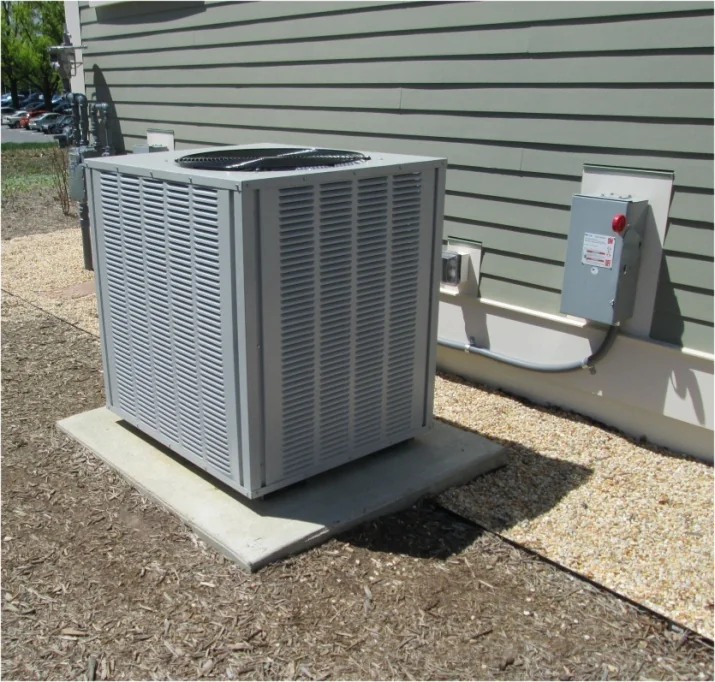 Ducted air-source heat pump
- The outdoor unit exchanges heat with the outdoor air. Inside, a coil and fan heat or cool the air that travels through the house ducts.
- Follow the heating cycle
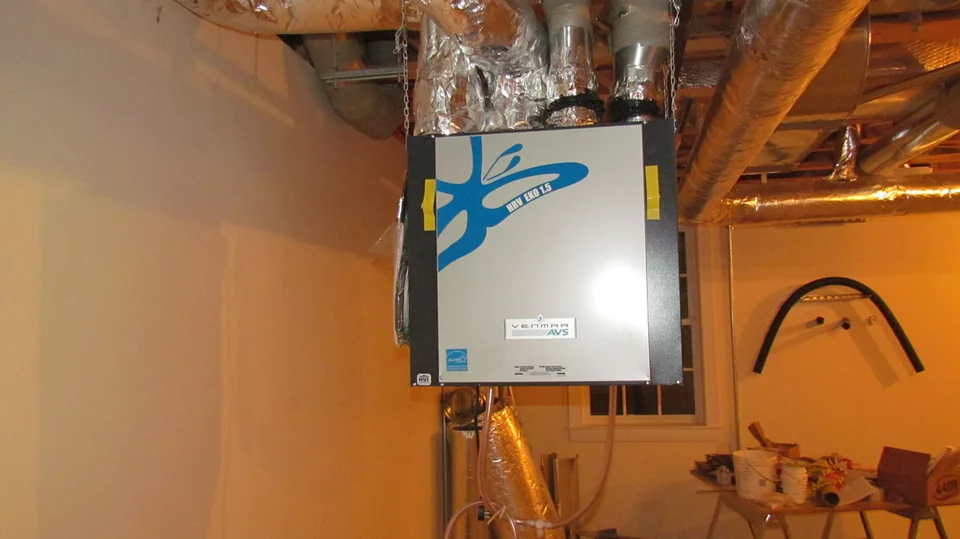 Heat recovery ventilator (HRV)
- Two fans bring fresh air in and draw stale air out through separate passages in a heat-exchange core.
- Follow the air through the HRV
Photo credits
- Ducted air-source heat pump · National Institute of Standards and Technology · NIST reuse terms
- Heat recovery ventilator (HRV) · National Institute of Standards and Technology · NIST reuse terms

Photos resized and converted to WebP for display.
How it works
On a cold morning
When the thermostat calls for heat, the outdoor unit draws heat from the outdoor air. Refrigerant carries that heat to the indoor coil. The fan draws room air through a return grille. The coil warms the air, and the supply ducts carry it back to the rooms.
On a hot afternoon
When the thermostat calls for cooling, the heat pump reverses. The indoor coil takes heat from the returning room air, and the outdoor unit releases that heat outside. The same registers now deliver cool air.
When the ventilator runs
Even when the heat pump is idle, the HRV can supply outdoor air to the bedrooms and living room while its exhaust fan draws damp bathroom air outdoors. In winter, the outgoing air warms the incoming air as they pass through separate channels in the core.
Planning a project
- A floor plan can show which rooms have a supply register, a return grille or a separate HRV vent.
- Mark any room that feels cold, stuffy or damp. Note the season, time of day and whether the door is usually closed.