 PONKA
Venturi scrubber system
Bring particulate-laden process exhaust into contact with water, then separate the resulting droplets from the airstream.
ExploreWet scrubbing / PFD-10
Connect a wet collector to water recirculation, solids separation, make-up supply and a defined bleed-off route.
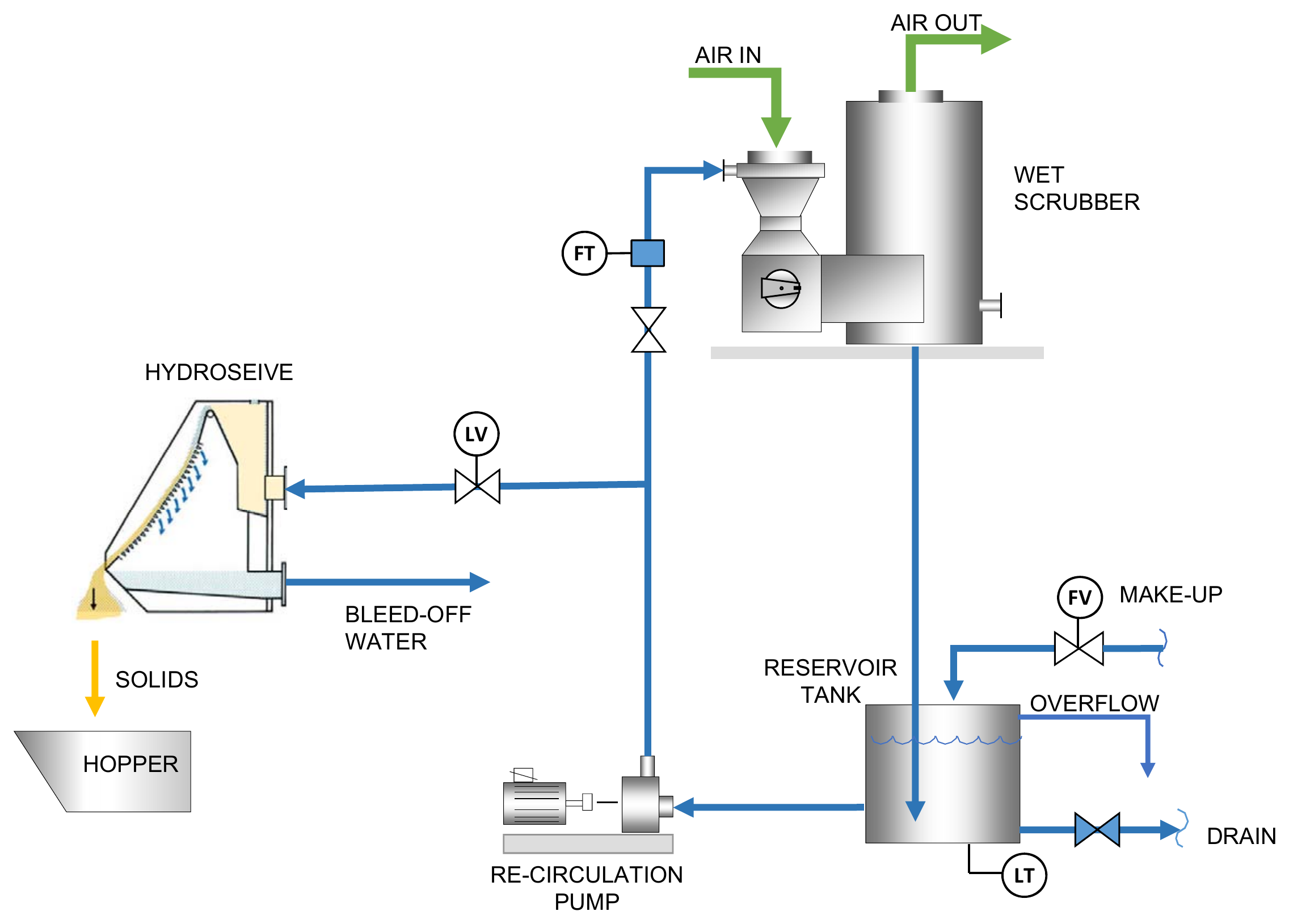
Follow the blue lines: water carrying solids drains from the wet scrubber into the reservoir. The recirculation pump sends water back to the scrubber, while a branch feeds a sloped screen called a hydrosieve. The screen directs solids into the hopper and lets screened water leave via the bleed-off line. A separate make-up line replenishes the reservoir.
Mining applications
Wet collection transfers particulate into a liquid stream. This supporting system explains what happens to that water: how it returns, how collected solids are managed and how liquid is supplied back to the scrubber.
Liquid carrying captured particulate drains from the wet collector into the reservoir tank.
The reservoir supplies the pump, which delivers water back to the collector at the required operating flow.
A branch from the pump discharge feeds the illustrated hydrosieve and hopper. The separation method must suit the actual particle size and screening behaviour.
Make-up replenishes losses. Screened bleed-off, overflow and drain connections need an identified containment or treatment destination.
| Component | Role in the system |
|---|---|
| Reservoir tank | Receive returning liquid and provide the recirculation inventory. |
| Recirculation pump | Supply the wet collector at the selected flow and pressure. |
| Solids separator and hopper | Remove the fraction suited to the chosen separation method. |
| Level and flow controls | Monitor liquid inventory and supply while coordinating make-up and bleed-off. |
Linked components open the VentilationComponents.com supplier catalogue. Equipment selection forms part of the system engineering.
Before equipment selection
Tell us about the material, operating conditions and problem you need to address.